
Grant County Parole and Probation
Oregon community corrections is a state function delivered with county agencies. Grant County runs its own Community Corrections office. Probation is a sentence served in the community and may begin without a prison term. Parole is supervised release tied to older or Board-controlled prison cases. Post-prison supervision, often shortened to PPS, follows many modern Oregon prison sentences. The Oregon Board of Parole and Post-Prison Supervision sets parole or PPS conditions, while Grant County staff handle daily local supervision.
A supervision record and a custody release record answer different questions. A positive probation result does not show that the person once served time in jail or prison. A parole or PPS assignment can support release from physical prison custody, yet it does not show that supervision has ended. When the exact transition matters, compare the supervision status with the Grant County Jail release entry, Oregon DOC status, or the final Board action.
| Status | How it starts | What to verify |
|---|---|---|
| Probation | A community sentence ordered by a court | The judgment and current Grant County Community Corrections assignment |
| Parole | Release from prison in a Board-controlled case | Final Board Action, DOC movement, and supervising office |
| Post-prison supervision | A supervision term after a qualifying prison sentence | DOC status, judgment terms, and local supervision |
- Parole
- Conditional release from prison under supervision in a case governed by Board authority.
- Probation
- A court-ordered community sentence that does not require a prior prison release.
- Discharge
- The formal end of the applicable supervision term, not merely release from a cell.
- Absconder
- A supervision term for a person alleged to have stopped reporting or whose location is unknown.
Verify Grant County Post-Release Supervision
There is no public Grant County name-search portal for parole or probation. Verification starts with the agency that holds the relevant record. Supply a full legal name and SID, if known, to reduce mistaken identity. Ask only whether public information confirms current supervision or identifies the proper office. Detailed case notes, reports, addresses, and treatment information may not be public.
- Identify whether the case was a local probation sentence or followed an Oregon prison term by reading the court judgment.
- Contact Grant County Community Corrections and ask what current public supervision status can be confirmed.
- For a prison case, compare the identity and location or caseload shown in Oregon Offender Search or VISOR. A community-corrections caseload supports release from prison, not final discharge.
- For a Board-controlled case, request the Final Board Action by name, SID, and hearing date from BOPPPS.
- If the result conflicts with a custody record, contact the last custodian. A newer violation or warrant may have returned the person to custody.
For the full county-jail, DOC, court, and records-request sequence, use the Grant County released-inmate search and records path.
Note: A matching name is not enough; compare SID, case details, and the supervising jurisdiction before drawing a conclusion.
Grant County Supervision Office
Day-to-day parole, probation, and PPS work is local. The county office can address available confirmation, reporting forms, travel requests, and community-service paperwork. BOPPPS sets conditions and exercises Board powers, but it does not conduct routine Grant County appointments. The distinction helps route a question to the staff who actually maintain the current supervision file.
201 S Humbolt Street, Suite 160
Canyon City, OR 97820
Phone: 541-575-1743
Fax: 541-508-4225
Monday through Thursday, 8 a.m. to 5 p.m.
For Board records, BOPPPS Victim Services lists 503-945-0907 and may help identify an assigned officer. A request for a Final Board Action should state the subject’s name, SID, and relevant hearing date. That record may show the action, next step, parole-release date, matrix expiration, and PPS expiration.
Grant County Release Reporting Forms
The local Community Corrections page provides monthly-report, travel-permit, and community-service forms. These forms are practical evidence that a person’s obligations continue after release from physical custody. They are not a public list of everyone under supervision. A blank form also cannot establish a particular person’s terms, assigned officer, due date, or permission to travel.
The official Grant County supervision page shows the office details, forms, and location warning captured below.
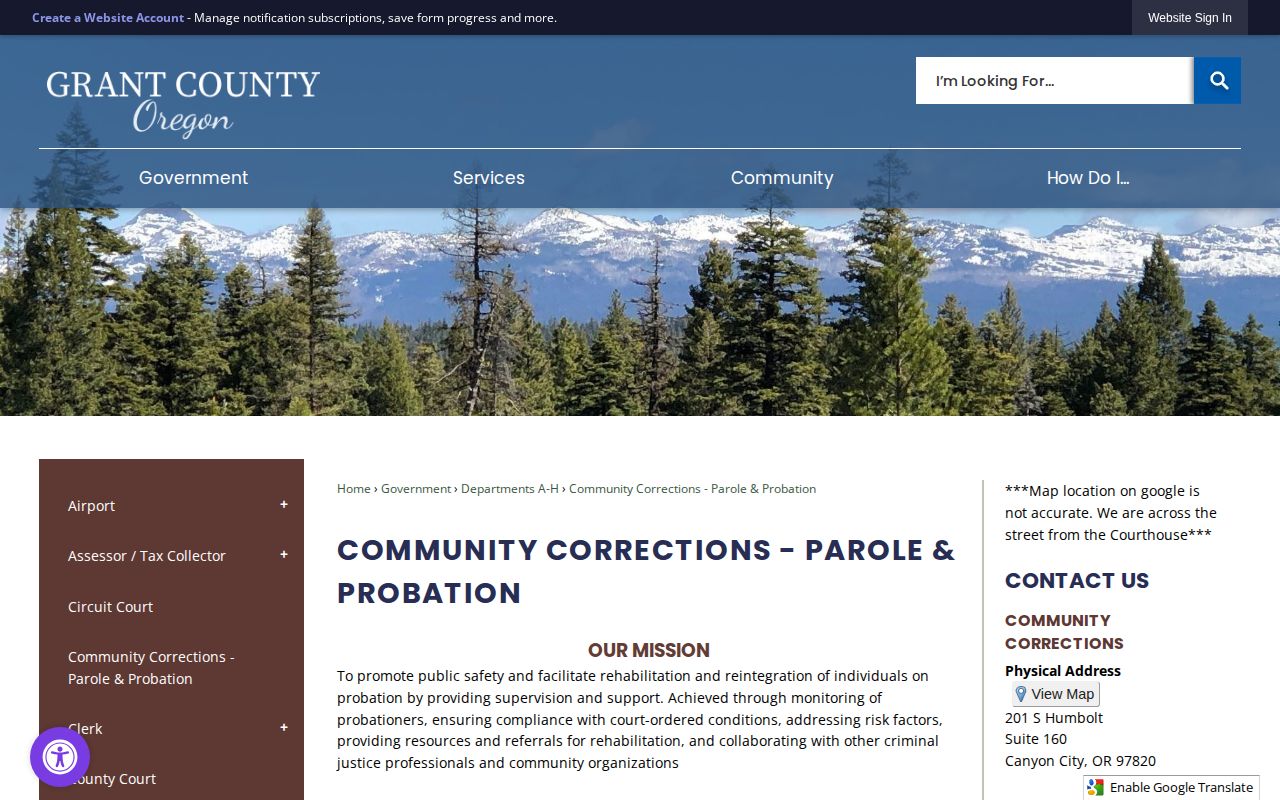
The image helps locate official resources, but instructions from the assigned officer control an individual case.
Note: Downloading a travel form does not grant travel permission; the supervising office must act on the request.
Finding Grant County Community Corrections
Grant County’s office page warns that Google places the supervision office incorrectly. It directs visitors across the street from the courthouse. That local instruction is more reliable than an unverified map pin. The office also operates Monday through Thursday rather than five weekdays, so a person preparing for an in-person check-in should confirm the day and any assigned instructions before traveling.
The courthouse and Community Corrections share the same street address but use different suites and functions. The court maintains judgments and probation orders. Community Corrections manages the current supervision relationship. Going to the court does not substitute for reporting to the supervising office, and court staff cannot change an officer’s directions.
Grant County Warrants and Absconders
No county-published online warrant or absconder list was located. A failed web search must never be translated into “no warrant.” Public supervision questions belong with Community Corrections at 541-575-1743. Public warrant questions should go to the Grant County Sheriff’s Office at 541-575-1131.
An alleged violation may change a person’s status after an earlier release. Oregon’s violation process can result in continued supervision, modified conditions, a local sanction, an extension, or return to prison. A past “on supervision” result should therefore be checked against newer jail, DOC, VISOR, or Board information when an exact present status is needed.
Note: “Absconder” is an alleged supervision status, not proof of a new conviction or a public warrant result.
Grant County Parole Board Records
BOPPPS publishes an individual-hearing calendar, but it does not provide a public name-searchable decisions database. A calendar entry proves that a hearing was scheduled. It does not prove that parole was granted, that a projected date was affirmed, or that the person left an institution. The Final Board Action supplies the decision and next action; DOC or VISOR supplies the later movement evidence.
Board jurisdiction is limited. It includes old-law crimes before November 1, 1989, aggravated murder, dangerous-offender sentences, and specified murder or life-minimum cases. Most modern determinate sentences are administered by Oregon DOC rather than decided through a parole-release hearing, even though BOPPPS sets PPS conditions.
The official BOPPPS hearing page provides the calendar and explains the hearing types shown in this capture.
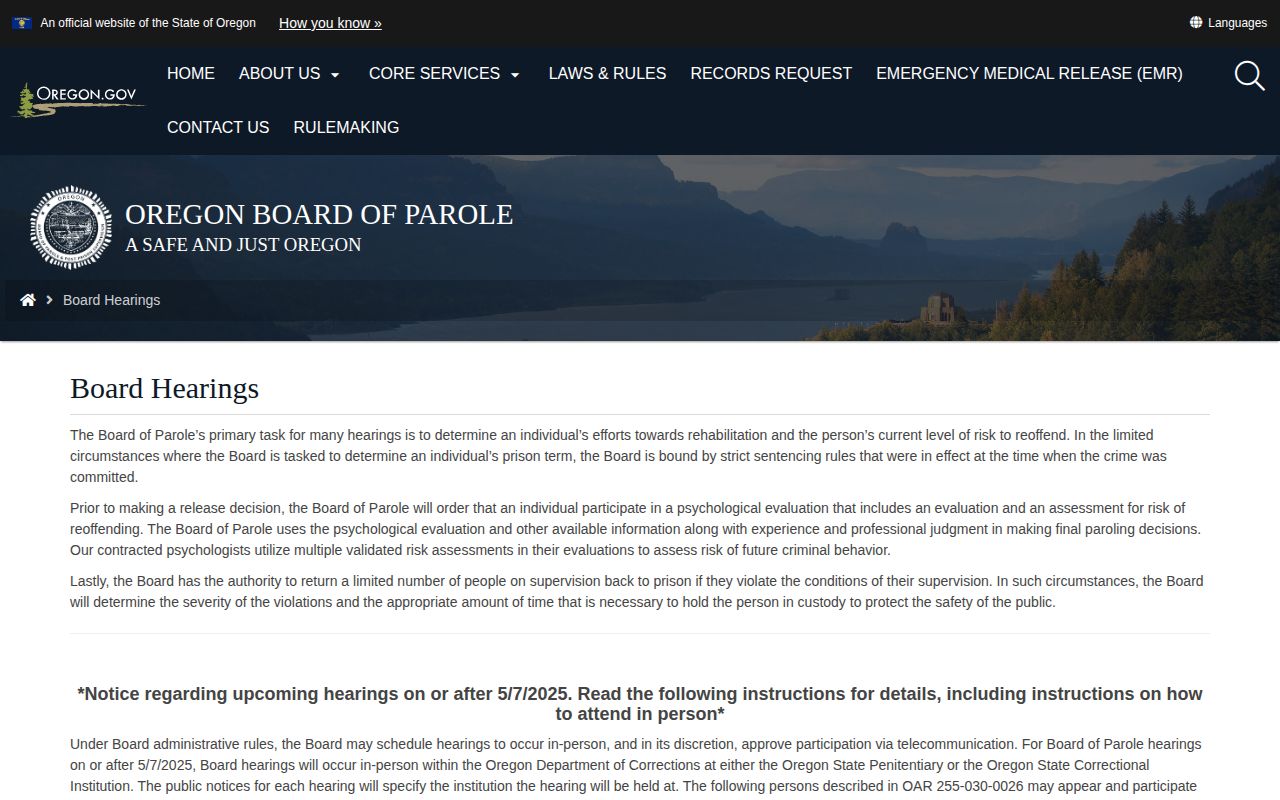
A hearing listing is the start of verification. The Board action and actual DOC event are still required.
Property After Grant County Release
ORS 421.125 requires Oregon DOC to address clothing and specified money or documents when an adult is discharged or paroled. That provision concerns a state-prison release. It is not a published Grant County Jail property policy and should not be used to promise what the local jail will return, how it will return it, or when pickup will occur.
For a DOC release into Grant County supervision, ask DOC about the state discharge process and Community Corrections about reporting needs. For property connected with the county jail, call the jail at 541-575-1134. Keeping the two systems separate prevents a state rule from being misapplied to a local booking.
Grant County Supervision Discharge
Release from a jail or prison ends physical confinement by that custodian. Discharge from parole, probation, or PPS ends the supervision term. Those events may be years apart. A person can be in the community and still have reporting duties, conditions, or a future expiration date. Conversely, probation may exist even if the person never entered state prison.
Use the record that controls the status. A court order is central to probation. A Final Board Action and Board records matter in Board-controlled parole. DOC public-information sheets and discharge material support a state corrections history. Ask Grant County Community Corrections what current public confirmation is available, and seek a formal agency record when an enduring answer is required.
A local sentence-completion check can combine three sources without confusing their roles. The Grant County Circuit Court judgment shows the imposed sentence and any probation term. The Grant County Jail movement entry shows when physical county custody ended. Community Corrections can then confirm what public supervision information is available. If the judgment committed the person to Oregon DOC, use the state status and discharge records rather than treating the jail transfer as release to the community.
For a Board case, expiration fields on the Board Action Form help distinguish a parole-release date from matrix or PPS expiration. A release date may begin supervision; an expiration date may mark the end of a stated term. Later violations, extensions, or new court orders can affect the current posture. Request the newest responsive action instead of relying on an old calendar entry or a prior verbal report.