
Grant County Projected Release Dates
A projected release date is the agency’s current calculation of when a sentenced person may leave physical custody if the judgment, credits, conduct, and holds remain as expected. Oregon DOC explanatory material uses “projected release date.” Older Oregon Offender Search displays have used “Earliest Release Date.” Read the exact label on the live record, since the public interface and the calculation can change.
An actual release date records an event that has already occurred. It may mean release to the community, movement to supervision, Short-Term Transitional Leave, or delivery to another custodian. The destination and status matter. A future date is never proof that departure happened, and “released by DOC” does not always mean the person is free from all custody.
| Date or status | What it establishes |
|---|---|
| Projected or earliest release date | The current sentence calculation, subject to change |
| VISOR release event | A participating source reported a custody change, not a certified register |
| Jail release entry | When and how the person left Grant County Jail |
| DOC final discharge record | The formal state release or discharge facts shown by DOC |
Find a Grant County Release Date
Start with the last known custodian. A local arrest, a county sentence, an Oregon prison term, and a Board-controlled parole case use different date sources. Searching Oregon DOC for every Grant County arrest creates false gaps because a person released locally without a DOC sentence may never appear there.
- For a person at Grant County Jail, call 541-575-1134 and ask whether the person remains housed there. If not, ask whether staff can state the departure date and whether it was release or transfer.
- For a county sentence, review the Grant County Circuit Court judgment and custody credit. Then request the final jail release entry from the Sheriff at 541-575-1131.
- For a state prisoner, use the Oregon Offender Search. Search by full or partial name and SID where known, match identity, and read the exact status and date label.
- For a Board-controlled sentence, review the hearing calendar, obtain the Final Board Action, and then confirm actual movement through DOC or VISOR.
- For durable state proof, request public-information sheets and the final release or discharge material through the Oregon DOC Public Records Center.
The broader Grant County released-inmate record workflow explains how court, jail, state, federal, and records-request channels fit together.
Note: An absence from one search may reflect scope, spelling, transfer, confidentiality, or lag rather than a release.
Grant County DOC Release Search
Oregon Offender Search is the state-prison route, not a Grant County Jail archive. Its information is updated periodically and may change. Search results should be matched with SID and other public identity details rather than a common name alone. A community-corrections caseload can support release from prison into supervision, but it does not show that all supervision is complete.
| Search or result field | How to use it |
|---|---|
| Full or partial name | Find candidates, then compare stronger identifiers |
| SID or County ID | Reduce identity errors in OOS or the current VISOR interface |
| Status and location or caseload | Distinguish prison custody, community supervision, and other displayed states |
| Sentence or case | Connect the date to the correct judgment |
| Projected or earliest release date | Read the current label as an estimate, not a past movement |
The official OOS entry page displays the state disclaimer and search route captured below.
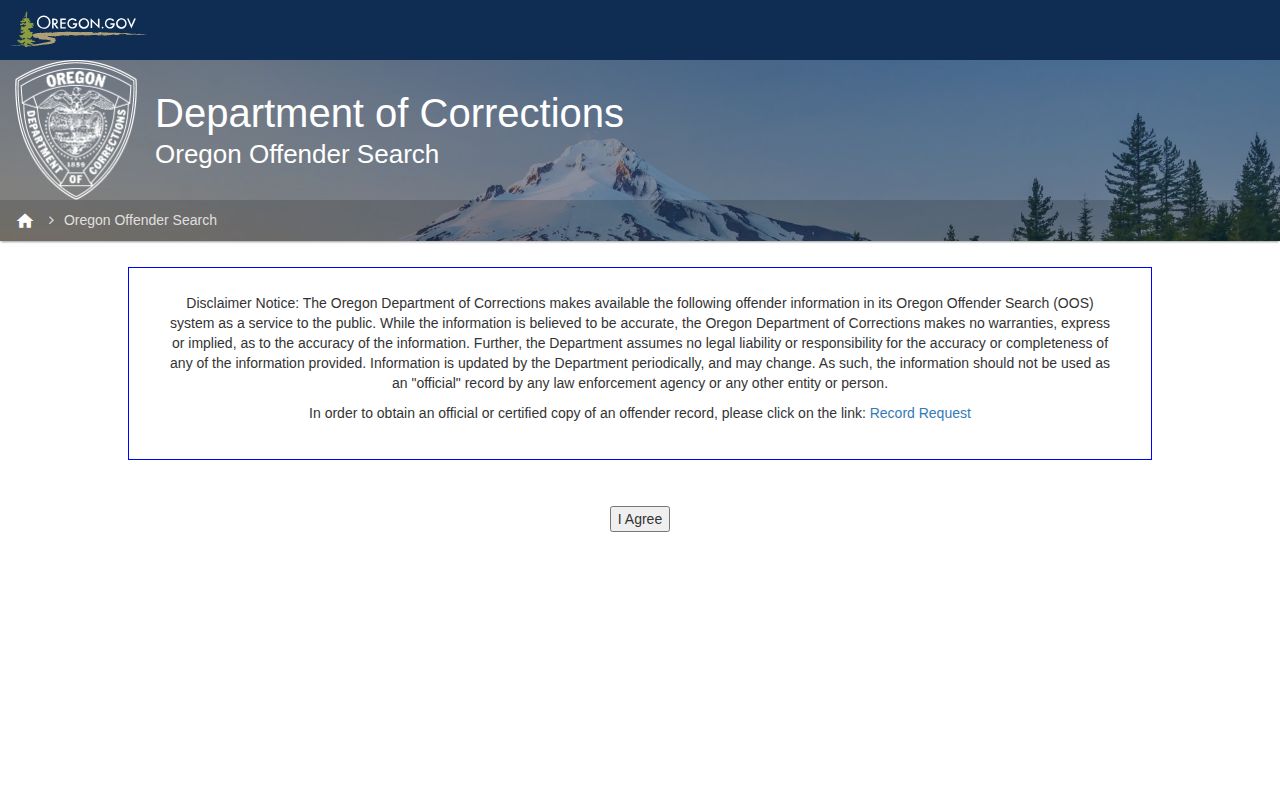
The disclaimer reinforces that a search result is an informational record that should be checked against the responsible agency.
Oregon Earned Time for Grant County
Oregon has no universal rule requiring every prisoner to serve 85 percent. Under ORS 421.121, an eligible adult in DOC custody for a felony committed on or after November 1, 1989 may earn reductions for appropriate institutional behavior and participation in adult basic-skills development. The maximum is 20 percent of the total term in a DOC institution, and credit cannot reduce actual prison confinement below six months.
That maximum could make an eligible term reach 80 percent, but eligibility is not universal. ORS 421.121 excludes sentences governed by several listed statutes. ORS 137.700, Oregon’s Measure 11 provision, requires service of the listed mandatory minimum and bars earned-time reduction during that minimum. ORS 137.635 can require the entire determinate term for a qualifying repeat serious felony when the statute and judgment apply.
The older schedule in ORS 421.120 applies to felonies committed before November 1, 1989. It must not be blended with the modern framework. ORS 137.750 also makes program and reduction eligibility judgment-specific. Read the actual judgment and current DOC computation rather than subtracting a fixed share from the imposed term.
Note: A maximum possible credit is not a promised credit, and arithmetic alone cannot determine an individual release date.
Why Grant County Release Dates Change
The displayed date combines the judgment with credit, conduct, and later legal events. ORS 137.370 governs sentence start and qualifying confinement credit. DOC’s recalculation project also explains how amended judgments and concurrent presentence credit can alter a date. A new record should replace an old screenshot when the two conflict.
| Factor | Possible effect | Best check |
|---|---|---|
| Earned-time award, loss, or restoration | Moves the projected date under applicable law and DOC rules | Live OOS date and DOC record |
| Amended judgment or custody credit | Changes the sentence calculation | Court judgment and DOC recalculation |
| Consecutive or concurrent terms | Changes how multiple terms combine | Judgments and DOC computation |
| Detainer or another hold | May change destination without changing the state term end | DOC/VISOR event and receiving-agency record |
| Board action | May set, affirm, defer, or postpone a date in a Board case | Final Board Action, then DOC movement |
| Short-Term Transitional Leave | May move an eligible person out of the institution before the projected date | DOC status and approved transition record |
Grant County Jail Release Dates
Do not apply the DOC 20-percent provision automatically to a Grant County Jail sentence. The county publishes no jail good-time policy or local release-computation rule in the reviewed official sources. A pretrial person also lacks a sentence-based projected date. Bond may be paid, or a court may order release, but another hold and processing can still prevent immediate departure.
For local custody, the court judgment explains the legal order, sentence, and custody credit. The jail record shows the physical movement. Call the jail for present status, then request the booking and final release entry from the Sheriff for a lasting record. Ask for the release date and time, release manner or authority, and transfer destination if public. The Sheriff’s current fee and response estimate must be obtained directly because neither was posted in the reviewed material.
Grant County Date Change Alerts
Oregon DOC’s sentence-recalculation FAQ says OOS is the official place to view an offender’s release date. When an adjusted calculation changes the date, OOS updates. VISOR checks and sends relevant notifications every two hours for date changes, moves, and releases. That interval describes the notification process, not a guarantee that each source record is instant.
The official DOC recalculation FAQ explains the changing projected dates and the VISOR interval shown in this capture.
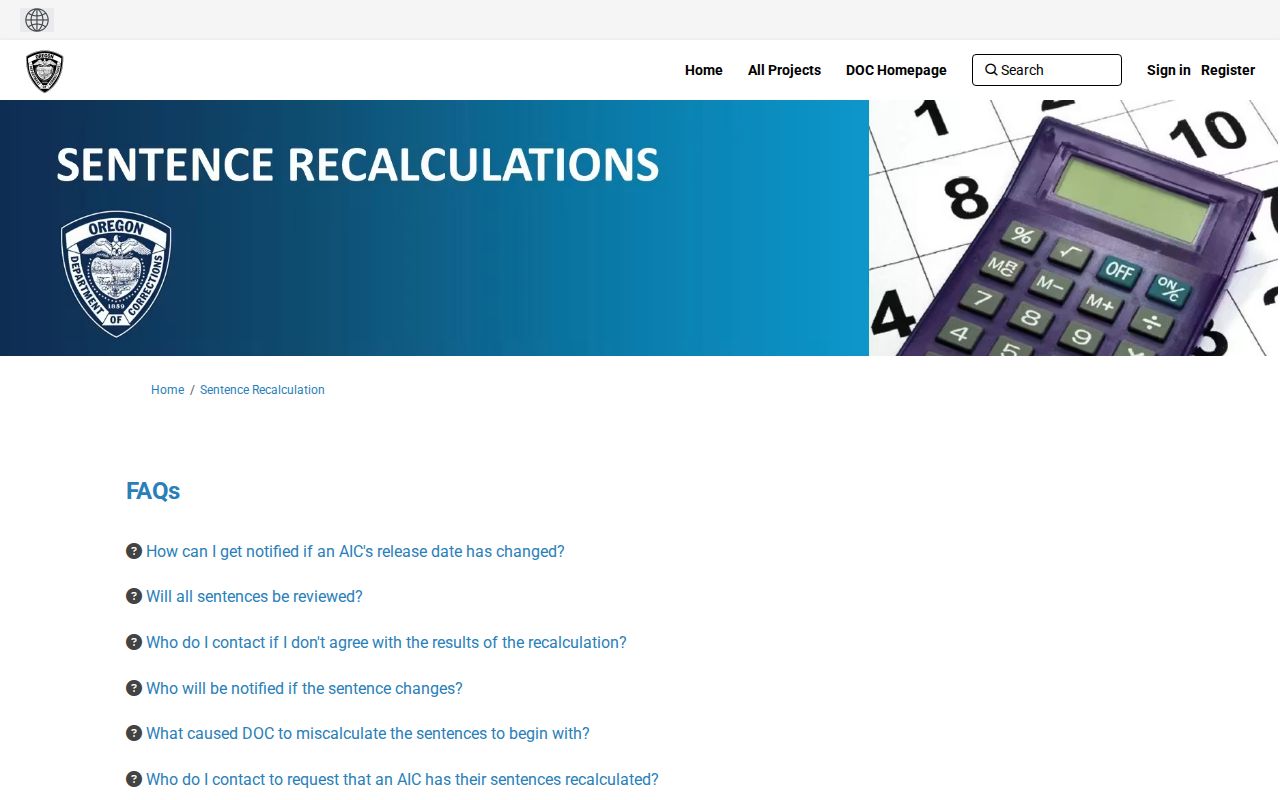
Use the live date for planning, but seek an actual event or agency record before reporting that release occurred.
A person may register for a qualifying event through the Grant County VINELink release check, now provided through Oregon VISOR. A transfer alert and a projected-date-change alert are not community release.
Note: Keep notification details current and call the custodian when an exact time has safety or legal significance.
Detainers on Grant County Release Dates
A detainer is a request or legal basis for another jurisdiction to take custody. Oregon DOC explains that a person can move directly to another jurisdiction when the DOC release date arrives. If a detainer is resolved or minor, the person may instead move to Community Corrections. Thus, a date can mark the end of Oregon prison confinement while custody continues elsewhere.
Read the event language closely. A VISOR transfer is not a community release. A Sheriff departure to DOC is not release from the state sentence. An ICE or federal handoff requires the receiving agency’s official locator or record. Preserve the names of both custodians so the date is not stripped of its meaning.
For a local movement, the Grant County Jail page identifies the jail contact, while the Grant County Sheriff page provides the records starting point. The court can explain the legal order through the Grant County court-record channels. None of these sources should be asked to certify a different agency’s custody event.
When the projected date passes without a clear public result, preserve the old date and check for a newer status. Ask DOC for public-information and final release or discharge material by subject name, SID, and date range. If the person entered a Community Corrections caseload, that supports a move out of prison custody but not completion of PPS. If VISOR reports transfer, identify the receiving custodian where public. These steps explain the outcome without turning a stale forecast into an actual release claim.
A certified or agency-issued response is strongest when the precise date will be used in a court or personal records process. State the date range, request the final action, and ask for certification when needed. Keep the OOS capture only as supporting context because its public values are periodic and subject to revision.